
-
-
-
Driving in Korea
-
03/31/2023
-
66.5K
12
17
-
-
Driving
automobile
-
-
-
Driving in Korea
The entire Korean territory is densely connected by highways and well-paved national routes, which poses almost no difficulty when you travel by car.
Without any traffic, four hours is all you need to go from Seoul and the northwesternmost regions of Korea to Busan, the southeasternmost city. Driving is especially useful for visiting small local cities, islands or mountainous regions with inconvenient public transportation. It also gives the wonderful opportunity to pull over on a country road and enjoy the beautiful natural landscape. Also, it’s the best way to enjoy foods and local treats at expressway rest areas, or hyugeso!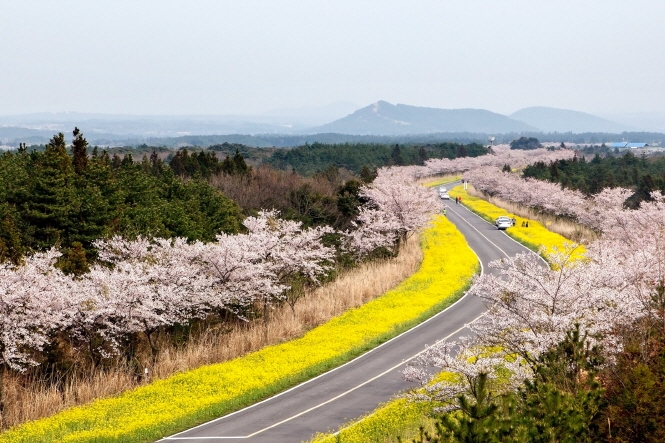
1. Renting a car
There are countless rental car companies in Korea. The best way to rent a car is to book one online in advance. It is easy to find rental car companies at airports as well as near train stations, bus terminals, and various places around the city. Rental car costs vary depending on the region, car type, season (peak season or off-season) and company.
Major rental car companies- SK Rent-a-Car: en.skdirect.co.kr (Korean, English)
- Lotte Rent-a-Car: www.lotterentacar.net (Korean, English, Japanese, Chinese, Spanish, French, German)
- Jeju Airport Rental Car: www.jarrent.com (Korean only)
+ Rental car qualificationsTravelers holding a valid International Driving Permit (IDP) or a mutually recognized foreign driver’s license may drive in Korea for up to one year from their date of entry. Major rental car companies may have additional requirements, such as a minimum age of 21 and at least one year of driving experience. Requirements vary by rental car company, so travelers are advised to check each company’s website or platform in advance. Some companies may also require a driver’s license issued in the traveler’s home country. Basic required documents include a valid IDP and passport, although additional documents may be required depending on the rental company.
2. Utilizing a navigation (GPS) apps
Google Maps navigation (GPS) doesn’t work in Korea. Fortunately, you can use navigation services provided by Naver Map and Kakao Map. Naver Map is supported in Korean, English, Chinese, and Japanese, whereas Kakao Map is available in Korean and English. Both apps are available for download on App Store and Google Play.
>> See useful apps in Korea+ Rental car insurance coverageCar insurance in Korea provides coverage for personal and third party injuries, the vehicle and the property of third parties (vehicles and other facilities). Typically, the cost of a rental car includes insurance for personal and third party injuries and the property of third parties. There are cases in which the insurance for one's own vehicle is included or added as an option. Also, the cost varies depending on the scope of insurance. When renting a car, make sure to check whether or not your vehicle is insured as well as the cost including options and details of insurance.
+ Things to take note of when driving in KoreaFirst of all, the driver's seat is located on the left side, which means you drive on the right side of roads. Distance is measured in kilometers and speed is indicated in kilometers per hour. There are two ways to pay tolls on expressways—getting a ticket upon entering an expressway toll gate and paying with cash as you exit or paying automatically with a Hi-pass device installed in the car. Hi-pass is an electronic highway toll payment system. If the car you rented does not have a Hi-pass device, be careful not to follow the Hi-pass lane (blue lane) when approaching a toll gate. If you drove through a toll gate on a Hi-pass lane by mistake, check with your rental car company on how to pay it off.
* This page was last updated on October 8, 2026, and therefore the information may differ from what is presented here. We advise you to check for updates before visiting.
* 1330 Korea Travel Hotline: +82-2-1330 (Korean, English, Japanese, Chinese, Russian, Vietnamese, Thai, and Indonesian)
